Highland Park Shooting: When Scanner Access Saved Lives
During one of the deadliest mass shootings in recent American history, open police scanner access gave civilians real-time information that helped them take cover, avoid the active shooter's path, and find loved ones. It also showed, in the starkest possible terms, what police encryption would have cost.
What happened in Highland Park
On July 4, 2022, during Highland Park's Independence Day parade, a gunman opened fire from a rooftop, killing seven people and wounding dozens more. Official communication channels were overwhelmed. Emergency alerts lagged. Social media filled with conflicting rumors.
One source had accurate, real-time information: open police scanner access.
The gear that made this possible—and what still works today
Highland Park worked because police radio was open. If your region has gone the Chicago route, no gear restores that access—encryption is still the problem. But for the unencrypted layer (NOAA weather, adjacent open agencies, federal, aviation, amateur), here's what listeners rely on for situational awareness during emergencies.
How scanners saved lives that day
- People monitoring police scanners knew about the active shooter within seconds — long before official alerts went out.
- Real-time police communications helped civilians understand where the shooter was, where police were searching, and which areas to avoid.
- Families used scanner information to locate relatives separated during the chaos and understand which areas were safe.
- Journalists monitoring scanners provided accurate public updates, countering rumors and reducing panic.
- People with scanner access didn't need to call 911 for information, leaving lines open for actual emergencies.
The timing that matters most
In active shooter situations, seconds matter. The difference between cover and exposure, between running toward danger and away from it, between finding a family member and hours of not knowing.
Highland Park's police department had not encrypted their radio. That meant:
- News media could broadcast live updates based on real police activity
- Apps like Broadcastify streamed real-time scanner audio
- Residents with scanner receivers got unfiltered information immediately
- No 30-minute delays (like Chicago's encrypted system imposes)
- No waiting for official press releases while events unfolded
How information flowed on July 4, 2022
Shooting Begins
Gunman opens fire from a rooftop along the parade route. Pandemonium as parade-goers scatter. First 911 calls flood the dispatch center.
Scanner Traffic Alerts Listeners
Highland Park police radio immediately fills with urgent traffic. Scanner listeners across the region hear about the active shooter within seconds of the first dispatch.
Real-Time Situational Awareness
Scanner traffic provides shooter's suspected location, description, and direction of movement. People still at or near the parade route use this information to flee in the opposite direction.
Search Expands
Police expand search perimeter. Scanner listeners know which areas are being cleared and which remain potentially dangerous—helping separated families understand where to reunite.
Media Provides Verified Updates
Local TV and radio stations monitoring scanners broadcast accurate information, countering social media rumors about multiple shooters and false safe zones.
Official Alerts Catch Up
Emergency management sends official alerts—nearly 45 minutes after scanner listeners already had accurate, actionable information.
Suspect Apprehended
Throughout the manhunt, scanner traffic keeps the public informed about search areas and police activity. Suspect caught in North Chicago after traffic stop.
Scanner listeners had actionable information 45+ minutes before official alerts went out. In an active shooter situation, those 45 minutes represent thousands of decisions made with real information instead of rumors or silence.
What if Highland Park had been encrypted?
Police departments across Illinois and the country have been moving to full encryption. If Highland Park had encrypted their police radio on July 4, 2022:
With encryption
- No real-time scanner access for the public
- Journalists dependent on official statements only
- 30-minute delays (or longer) for any information
- Families unable to track police activity
- Increased 911 call volume from people seeking information
- Social media rumors filling the information vacuum
Without encryption (what actually happened)
- Immediate public awareness of the threat
- Real-time media updates based on police activity
- Informed decisions about safety and movement
- Families could track search areas and safe zones
- Reduced panic through accurate information
- Independent verification of official accounts
A pattern, not an exception
Highland Park is not a one-off. Open police scanner access has proved its value repeatedly during emergencies:
- During active shooter events, real-time radio traffic warns residents to shelter in place or avoid specific areas
- During natural disasters, tornado paths, wildfire evacuations, and flood zone boundaries reach people before official channels update
- Bomb threat evacuations and safe perimeters get communicated immediately
- Dangerous vehicle pursuits through neighborhoods are trackable in real time
- Chemical spills and hazmat incidents create immediate public awareness of affected areas
The encryption trend threatens this access
Despite cases like Highland Park, police departments nationwide are encrypting radio at an accelerating pace. The stated reasons—officer safety, victim privacy—are unsupported by evidence in multiple departments' own records searches.
The documented benefits of open access—lives saved, accurate reporting, public accountability—disappear when a department flips the switch.
The evidence is clear
Open police scanner access saves lives during emergencies
The Highland Park shooting showed what public safety advocates have argued for years: real-time access to police communications is a safety tool, not a threat.
When police departments encrypt their radios, they do not just restrict journalists or frustrate hobbyists. They cut off a public safety resource with a proven track record at the moments when it matters most.
What you can do
If your local police department is considering encryption, or has already encrypted their communications:
- Contact your city council members and express concerns about public safety
- Request documentation of any incidents where scanner access caused harm (there likely is none)
- Advocate for hybrid systems that protect sensitive operations while keeping routine dispatch open
- Share real-world examples like Highland Park with decision-makers
- Support local journalism that relies on scanner access for breaking news
- Join or organize community opposition to blanket encryption policies
Take Action for Transparency
Your voice matters. Here are concrete ways to advocate for open police communications in your community.
Contact Your Representatives
Use our templates to email your local officials about police radio encryption policies.
Get StartedRead Case Studies
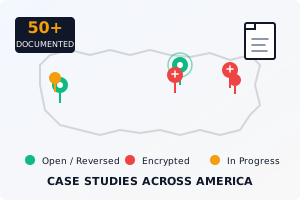
See how encryption has affected real communities - from Highland Park to Chicago.
View CasesSpread Awareness
Share evidence about police radio encryption with your network and community.
Public Testimony
Learn how to speak effectively at city council and public safety meetings.
Prepare to SpeakLearn more and take action
Frequently Asked Questions
How did open scanner access help during the Highland Park shooting?
During the July 4, 2022 shooting, open police scanner access provided immediate situational awareness, helped civilians avoid active danger zones, allowed families to locate separated loved ones, and enabled journalists to counter rumors with accurate information. People knew where the shooter was and which areas to avoid long before official alerts.
What's the difference between Highland Park and Chicago's encrypted system?
Highland Park had open police scanner access, allowing the public real-time information during the active shooter event. Chicago encrypts police radio, adds 30-minute delays, and removes 'sensitive' transmissions. In a similar emergency, Chicago residents would be left without critical real-time information.
Why does timing matter so much in active shooter situations?
During active shooter events, seconds matter. Knowing where the threat is allows people to shelter in place, flee in the opposite direction, or avoid returning to danger zones. A 30-minute delay—like Chicago's encrypted system imposes—would make that information useless during the emergency itself.
Could Highland Park have encrypted their police radios?
Yes, encryption is a policy choice, not a technical requirement. Had Highland Park encrypted like Chicago, residents would have been left with rumors and incomplete official alerts. The open communications that helped save lives would have been blocked.
How did scanner access reduce panic during the shooting?
While social media was filled with conflicting rumors about multiple shooters and various danger zones, scanner listeners had accurate, real-time information. This allowed them to make informed decisions and share verified information with others, reducing panic-driven misinformation.
What information did scanner listeners receive during the Highland Park shooting?
Scanner listeners received real-time updates on the shooter's suspected location and direction of movement, areas being cleared by police, where victims were being treated, which roads were blocked, perimeter locations where families could reunite, and updates on the manhunt as police searched for the suspect across multiple jurisdictions.
How did journalists use scanner access during the Highland Park shooting?
Journalists monitoring police scanners could dispatch crews to the correct locations, provide accurate updates to viewers and listeners, counter social media misinformation with verified facts, and document the police response in real time. This allowed local news to serve its critical public safety function during an active emergency.
What does Highland Park show other communities?
Highland Park shows that open police communications are a concrete public safety resource during emergencies. Communities weighing encryption should look at the documented outcomes—lives saved, reduced panic, informed decisions—against the theoretical concerns encryption advocates cite. The real-world record shows scanner access helps public safety during major incidents.
Sources & Further Reading
- ABC7 Chicago: Highland Park shooting timeline
- Local news reports documenting scanner-based public alerts
What you can do
Encryption is a policy choice, not a technical requirement. Here are the next steps that have worked in Highland Park and elsewhere.